
Swing Jib, Overhead Crane or Vacuum Lifter? How to Choose the Right Lifting Solution for Your Workspace
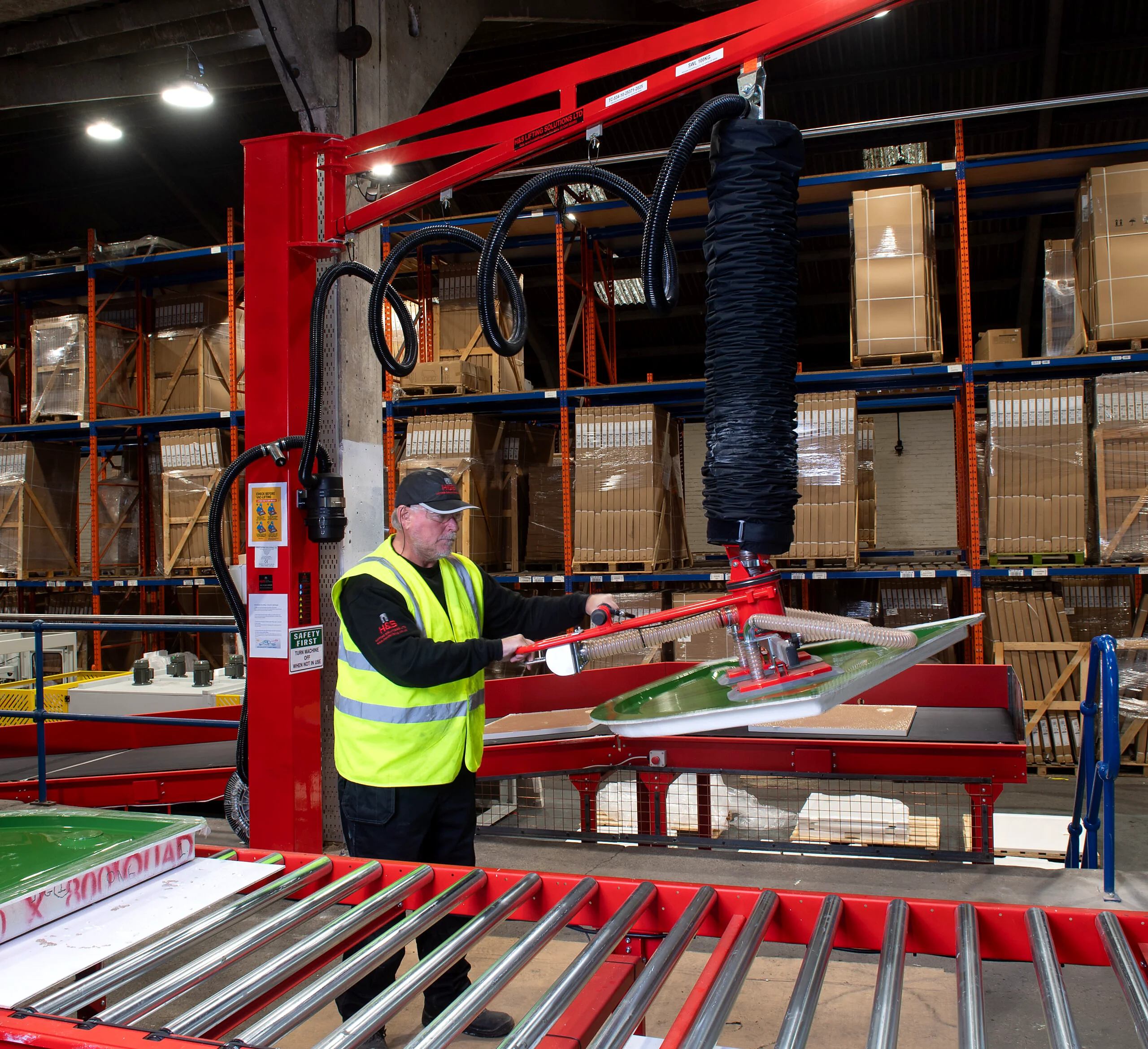
When it comes to choosing industrial lifting equipment, it isn’t simply about finding a system that’s capable of lifting the required weights.
Every workplace is different, with unique requirements and contexts. So, it stands that the most suitable lifting solution will depend on a range of factors, including the type of load being handled, how often it’s being lifted, the space available, and the layout of the site.
For example, even if they can lift the same weights, a lifting solution that’s best suited for a busy production line is unlikely to be the best match for a maintenance workshop. Or, in some cases, the most effective solution may involve combining a number of different lifting systems, to maximise efficiency, safety and productivity.
In this article, H&S Lifting’s expert team have explained the key differences between some of the most popular types of industrial lifting equipment: swing jib cranes, overhead cranes and vacuum lifters. This way, you can identify which solution represents the best investment for your workplace.
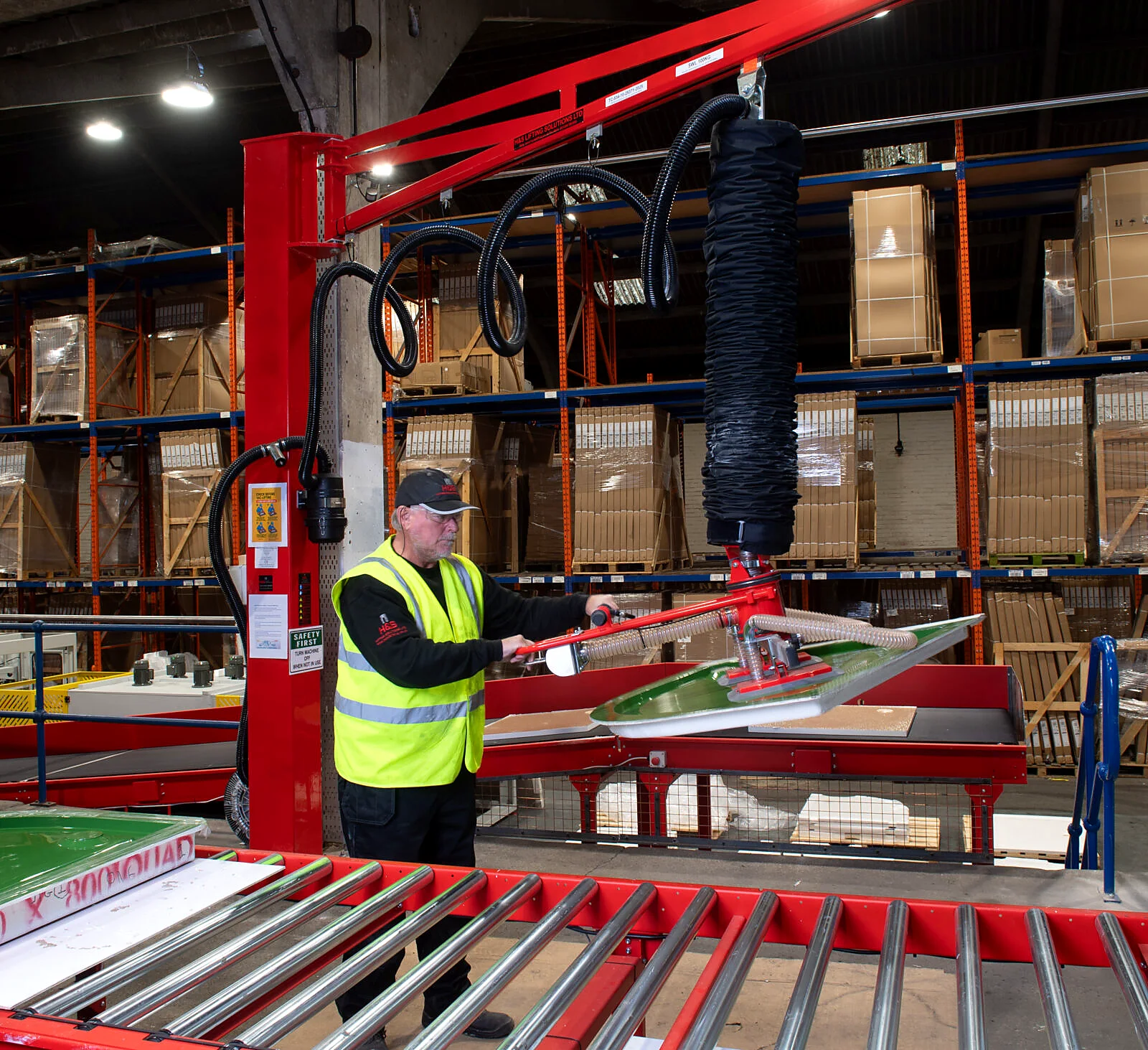
The 4 key factors to consider
For facilities and production managers, if you’re weighing up which lifting solution would best suit your site, these are the four key decision factors that you need to consider.
Load type and surface
First, you’ll need to consider the type of load you’ll need the equipment to lift.
Different lifting systems are designed for different applications, including specific load sizes, shapes and surfaces.
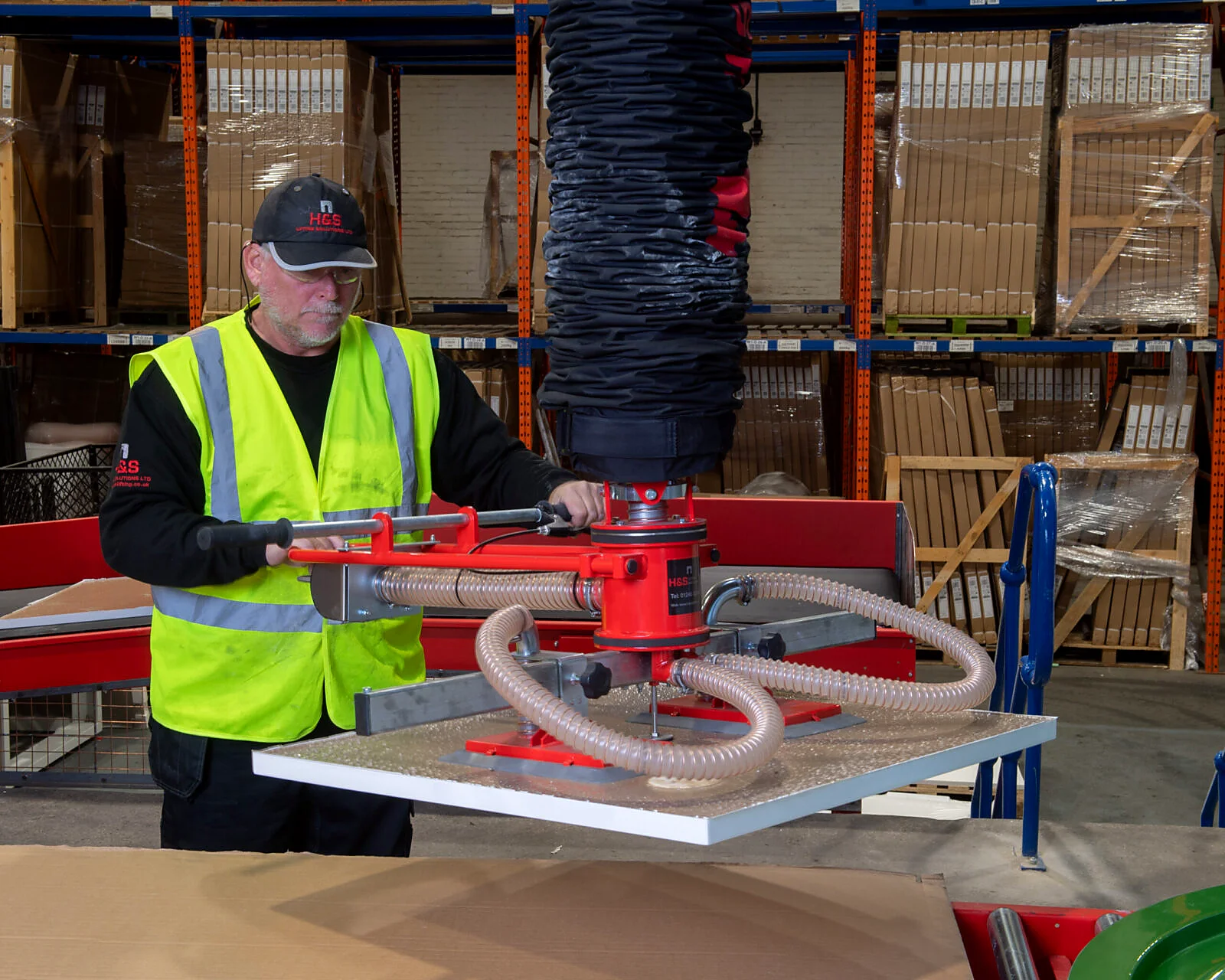
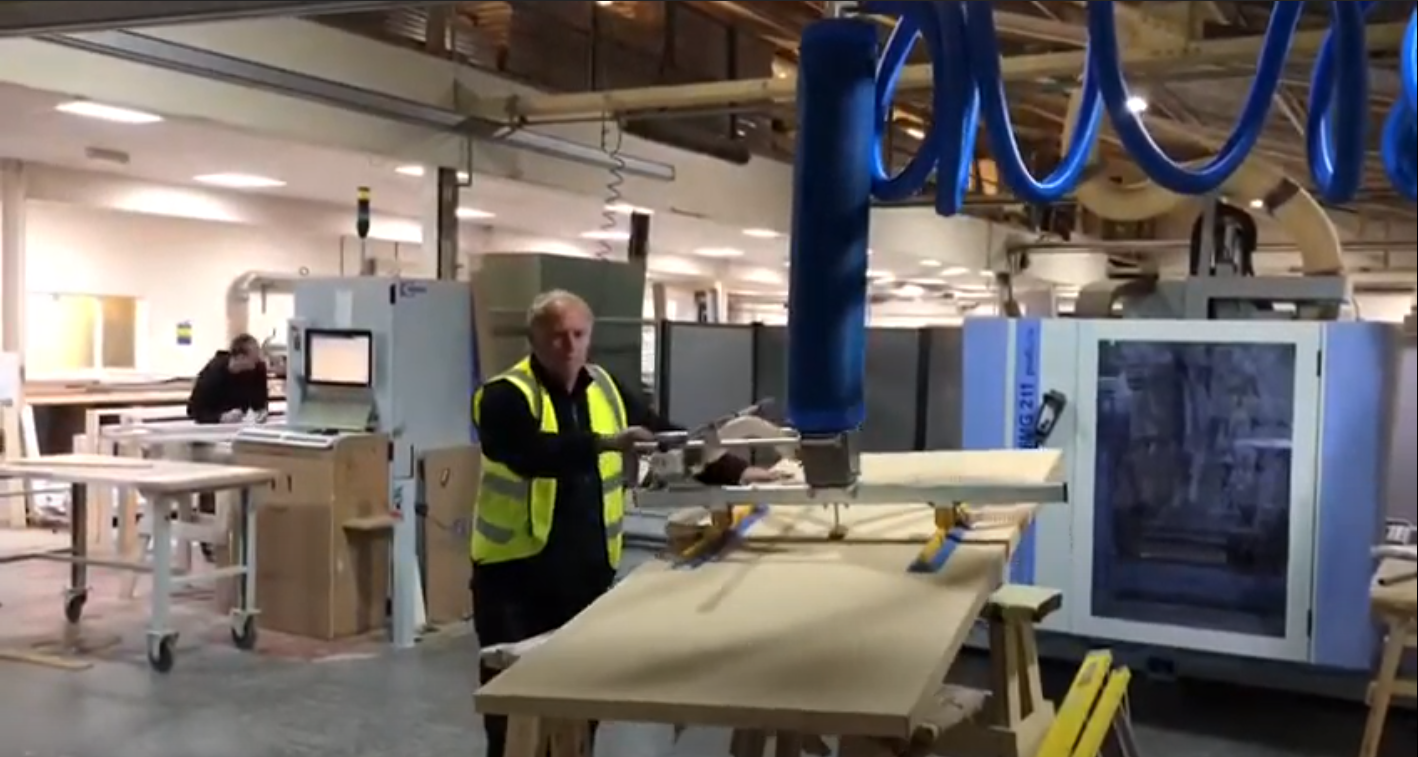
- Vacuum lifters – Are best suited to flat, porous or awkward-to-grip items, like boards, sacks and drums.
- Jib cranes and overhead cranes – Can handle a wider range of items, via the use of slings, chains or hooks.
So, you may find that the shape and surface of the intended load may rule vacuum lifters in or out immediately.
Lift frequency and precision
Then, think about how often lifting will be required as part of your day-to-day operations.
For example, do operators repeatedly lift the same type of load in the same location? Or, do loads need to be lifted and transported between different areas of the site?
- Jib cranes – Best suit frequent repetitive lifts at a single station.
- Overhead cranes – Can support facility-wide movement of varying loads.
- Either of these options can then be paired with a vacuum attachment, to support delicate positioning (e.g. of fragile objects).
Coverage area and space
Then, the amount of space available can also help to narrow down which lifting systems are compatible with your site.
- Jib cranes – Cover a fixed circular radius from a wall, column or floor mount. They do not require any overhead steelwork. So, they are a good match for smaller spaces.
- Overhead cranes – Require additional space. This is because they need runway beams as part of their installation, plus extra headroom. They also cover the full bay.
Installation and building structure
Finally, before any lifting equipment is installed, it’s key that you ensure the building is capable of supporting it safely.
This means that you’ll need to confirm that your site can accommodate the equipment’s specific installation and safety requirements.
- Freestanding jib cranes – Require either floor mounting or concrete footing to support their lifting operations.
- Wall-mounted versions – Need a suitable structural wall, to provide extra stability.
- Overhead cranes – Require suitable steelwork, runway beams and sufficient ceiling height.
It’s worth checking that your site is able to meet these requirements, before you invest in the equipment.
By arranging a professional site survey, you can get specialist guidance about what your preferred weighing solution requires, and whether your site is able to tick those boxes.
Choosing a combination of solutions
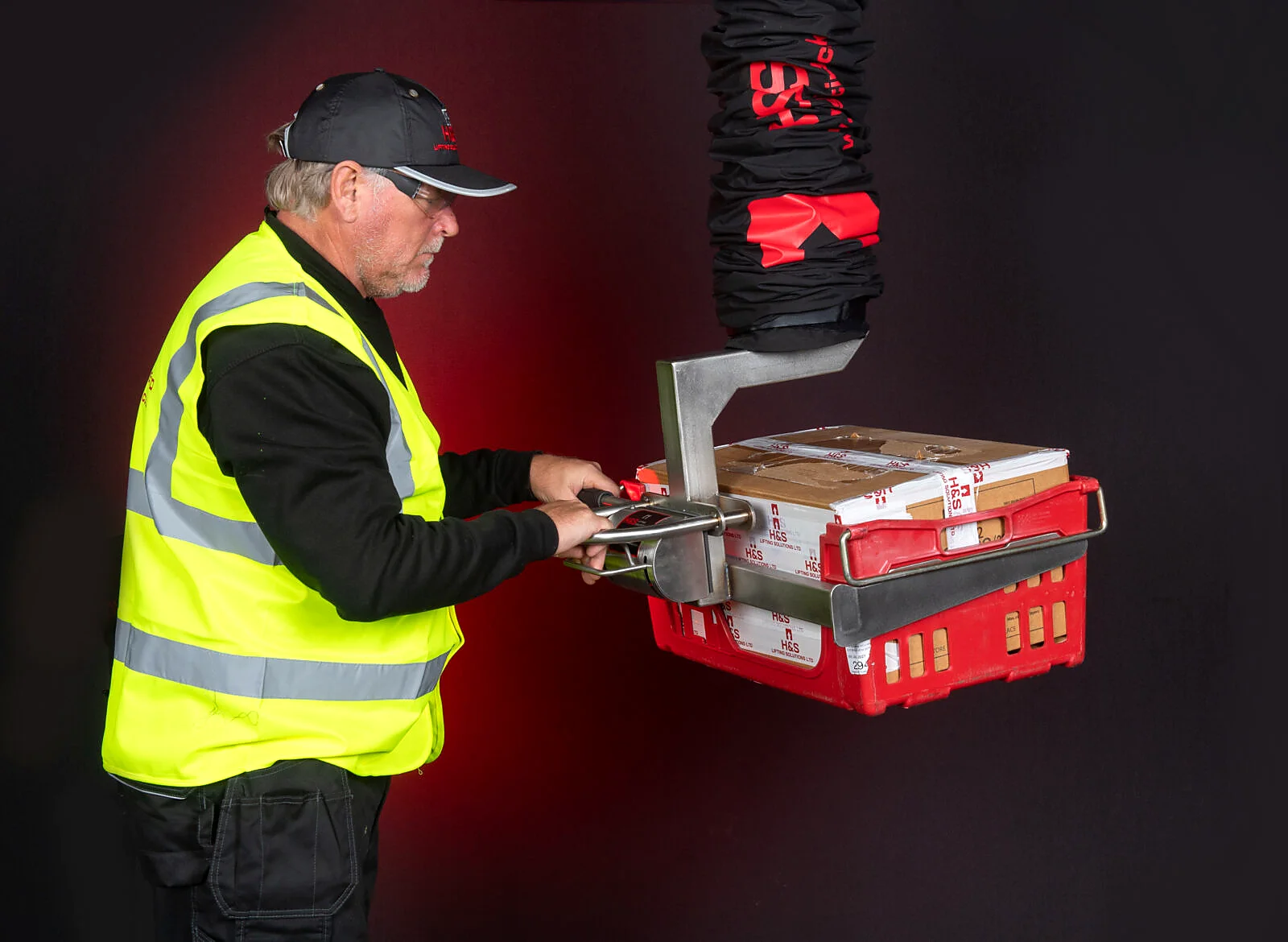
In some cases, one single lifting system may not meet all of your requirements.
So, businesses often use a combination of lifting equipment, to cover a range of different operational tasks.
At H&S, we manufacture all three of these lifting equipment types, (plus hoists). So, in these instances, we help our clients to combine this equipment, to further maximise the operational efficiency gains.
For example, one of our vacuum lifters can be mounted to a swing jib, to better handle repetitive sack or drum handling. This is a great effective solution, as it means operators can lift and position loads with minimal manual effort.
By looking at the complete lifting process – rather than focusing on one piece of equipment – we help our clients to devise a solution that aligns with the way the whole business operates.
Choosing the right lifting solution for your business
By assessing these factors, before you choose your equipment, you can ensure that your lifting system is not only a good investment, but that it is suited to meet all your requirements, for the long term.
At H&S Lifting, we design and manufacture a wide range of lifting equipment, including swing jib cranes, overhead cranes, vacuum lifters and palans.
Our skilled team of specialists are highly experienced and fully qualified. We are also a LOLER Compliant organisation. To find out more about the Lifting Operations and Lifting Equipment Regulations (LOLER) and their examination requirements, check out our “We are LOLER Compliant” article.
To arrange a free no-obligation site assessment and find the best combination of weighing solutions for your operations, speak to our experienced team.
Quelle est la différence entre un pont élévateur hydraulique et un pont élévateur à dépression ?
In industrial, manufacturing and commercial contexts, lifting equipment is one of the most effective ways to reduce the risk of workplace injury. These specialist solutions are designed to completely minimise […]

Can I use a Vacuum Lifter in a tight space?
Vacuum lifting solutions are highly versatile, dependable solutions, which can be used to support businesses in any industry. They are also compatible with sites of all shapes and sizes – […]
What is the Maximum Weight a Vacuum Lifter can lift?
Vacuum lifting equipment is extremely versatile, and offers a wide range of solutions that can support businesses of every size, industry and context. To identify the most effective weighing equipment […]